Rhinoplasty
Rhinoplasty in Dubai

Rhinoplasty, often referred to simply as a nose job, is a highly sought-after cosmetic and functional surgical procedure.
It aims to expertly reshape the nose to enhance facial appearance or resolve critical medical issues like breathing problems. This is your definitive guide, providing complete information on rhinoplasty in Dubai.
It details the procedure, its risks and benefits, the recovery process, and why considering an integrated ENT specialist perspective is vital for optimal functional and aesthetic results.
The Dual Purpose of Rhinoplasty in Dubai
Rhinoplasty is a precise and specialized cosmetic surgical procedure dedicated to modifying the nose’s shape and size. This intricate procedure is a powerful tool, used for two primary reasons:
1- Cosmetic rhinoplasty: To improve facial appearance, creating harmony and symmetry with other facial features.
2- Functional rhinoplasty: Correct internal structural issues, such as a deviated septum or collapsed nasal passages, to dramatically enhance breathing and function.
This dual approach is often managed by surgeons trained in plastic surgery or an ENT (Ear, Nose, and Throat) specialist sub-specialized in facial plastic surgery, ensuring that aesthetics and airways are expertly addressed.
Who is a Candidate for Rhinoplasty?
Individuals choose to undergo rhinoplasty surgery for various personal and medical reasons:
- Correcting congenital abnormalities: Addressing congenital disabilities that affect the nose’s shape or function.
- Improving overall facial appearance: Enhancing the aesthetic appeal of the face by reshaping the nose to complement other features better.
- Opening blocked nasal passages: Fixing a deviated septum or other obstructions to improve breathing—a primary goal of functional rhinoplasty.
- Repairing facial fractures: Restoring the nose’s structure after traumatic injuries such as a broken nose.
- Restoring breathing function: Following diseases, cancer treatments, or severe burns.
Ideal Candidates for Rhinoplasty In Dubai Should:
- Have completed facial growth: The final, stable outcome requires patients to have reached physical maturity, usually defined as 16 years for girls and 18 years for boys.
- Be in good physical health: Free from severe medical conditions that could impair healing.
- Have realistic goals: Understand the limitations of nose surgery and aim for achievable, natural-looking results.
- Seek the procedure for personal reasons: Not undergoing surgery to please someone else.
What Does Rhinoplasty Do?
Rhinoplasty is highly versatile and can address several structural and aesthetic aspects of the nose:
- Correcting a bulbous, upturned, hooked, or droopy nose tip.
- Fixing a deviated septum for improved airflow.
- Adjusting the size and position of the nostrils.
- Removing dips or bumps (dorsal hump) on the bridge of the nose.
- Changing the nose’s overall size creates better facial balance and harmony.
- Opening blocked nasal passages for better health and quality of life.
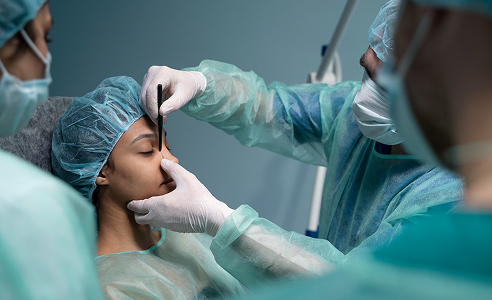
Different Surgical Approaches to Nose Job in Dubai
The surgeon’s approach depends heavily on the extent of reshaping required and whether the procedure is cosmetic, functional, or both.
Open rhinoplasty
This approach, used for major reshaping, involves a small, inverted V-shaped incision across the columella (the strip of tissue separating the nostrils). This lets the surgeon lift the skin, providing a direct view of the underlying nasal bone and cartilage structures.
Closed rhinoplasty
This method is used for minor to moderate reshaping. It involves incisions inside the nose, meaning no external incisions are made. This technique offers the benefit of no visible external scarring.
Additional Types of Nose Reshaping in Dubai
- Cosmetic rhinoplasty: Focuses purely on enhancing the nose’s appearance.
- Nonsurgical rhinoplasty: Uses dermal fillers for temporary corrections to camouflage bumps or add volume.
- Functional rhinoplasty: Solely focused on restoring form and improving breathing function after medical treatments, injuries, or correcting congenital disabilities like a severely deviated septum.
- Secondary (Revision) rhinoplasty: Addresses issues or patient dissatisfaction from a previous nose job.
Rhinoplasty vs Septoplasty: The ENT Perspective
| Procedure | Primary goal | Focus area |
| Rhinoplasty | Improves external appearance and internal structure | Bone, cartilage, and external nasal tissues |
| Septoplasty | Focuses on repairing internal structural issues | Deviated nasal septum (the wall dividing the nostrils) |

Procedure Details
Before the procedure
Your journey begins with a meticulous consultation with your surgeon. This session is critical for discussing your goals, expectations, and the proposed surgical options.
A thorough pre-operative assessment will be carried out, encompassing a physical examination and an internal nasal assessment (vital for successful functional rhinoplasty). The surgeon will also capture detailed photos and use advanced technology to visualize potential results and outline all pertinent risks.
During the procedure
As a typical outpatient procedure, rhinoplasty does not usually require an overnight hospital stay; you can expect to go home the same day.
It is performed under general anesthesia or local anesthesia with intravenous sedation in a fully accredited hospital or outpatient facility. Steps of the procedure (General):
1- Anesthesia: Administered to ensure comfort and safety.
2- Incisions: Incisions for the procedure are placed either internally, within the nostrils (closed rhinoplasty), or externally, across the base of the nose (open rhinoplasty).
3- Reshaping: The surgeon carefully raises the skin covering the nasal bones and cartilage and then reshapes them (using grafts, trimming cartilage, or filing bone).
4- Repositioning: The skin is smoothly redraped over the new framework and secured with delicate stitches.
After the procedure
Immediate post-surgery care involves placing an external splint (plastic or metal) to maintain the nose’s new structure and reduce swelling. Internal support, using soft gauze or specialized splints, is also provided to stabilize the septum.
Swelling and bruising around the nose and eyes are inevitable but typically begin to resolve within a few weeks.
Recovery and Outlook: A Commitment to Healing
Recovery time
While you can often return to work within a week, full recovery can take up to a year as residual swelling dissipates. Most swelling subsides within the first three months, giving you a clear view of your new nasal contour. Stages of swelling:
- First four to six weeks: There is noticeable swelling and possible bruising, particularly on the bridge and tip.
- Three months post-surgery: Approximately 80-90% of the swelling subsides, and the nose looks nearly finalized.
- One year post-surgery: The nose reaches its final, refined shape as all minor, deep swelling dissipates.
Tips for Speeding up Healing
Following your surgeon’s post-operative instructions is the most effective way to maximize your aesthetic results and facilitate a rapid, smooth recovery after your rhinoplasty in Dubai.
- Apply cool compresses (not ice) to the cheeks or under the eyes (avoiding direct contact with the nose).
- Keep the head elevated, especially when sleeping, for the first few weeks to minimize swelling.
- Avoid heavy lifting, bending, and any activity that could risk impact on the face.
- Follow all prescribed post-operative instructions and attend all follow-up appointments.
Risks and Benefits
Benefits of rhinoplasty
- Achieving better balance and symmetry.
- Permanent fixing of congenital or acquired deformities.
- A significant improvement in the quality of life through clearer airways.
- Regaining confidence in your appearance and profile.
Potential Risks
While the procedure is standard, potential risks must be considered:
- A hole in the septum (the dividing wall of the nose), known as a nasal septal perforation.
- Infection and persistent nosebleeds.
- Poor wound healing or visible scarring.
- An unsatisfactory aesthetic or functional appearance may require revision surgery.
- Changes in the sense of smell and temporary pain.
When to Call the ENT Surgeon for Nose Problems?
If you experience any of the following symptoms, call your healthcare provider right away:
- Difficulty breathing that suddenly worsens.
- Severe or rapidly worsening pain and persistent swelling.
- Signs of infection include fever, warmth, redness, or yellow discharge.
- Uncontrolled or heavy nosebleeds.
Begin Your Transformation at Quttainah Specialized Hospital for Rhinoplasty in Dubai
Your eyes deserve the artistry, precision, and care that only Quttainah Specialized Hospital can deliver.
Whether you seek Blepharoplasty in Dubai for cosmetic enhancement or droopy eyelid surgery to improve vision, our team ensures safe, natural, and lasting results.
Schedule your consultation today and experience eyelid surgery in Dubai redefined, with the perfect fusion of surgical excellence and 7-star luxury. Your journey to refreshed, confident eyes starts here.
Book An Appointment