


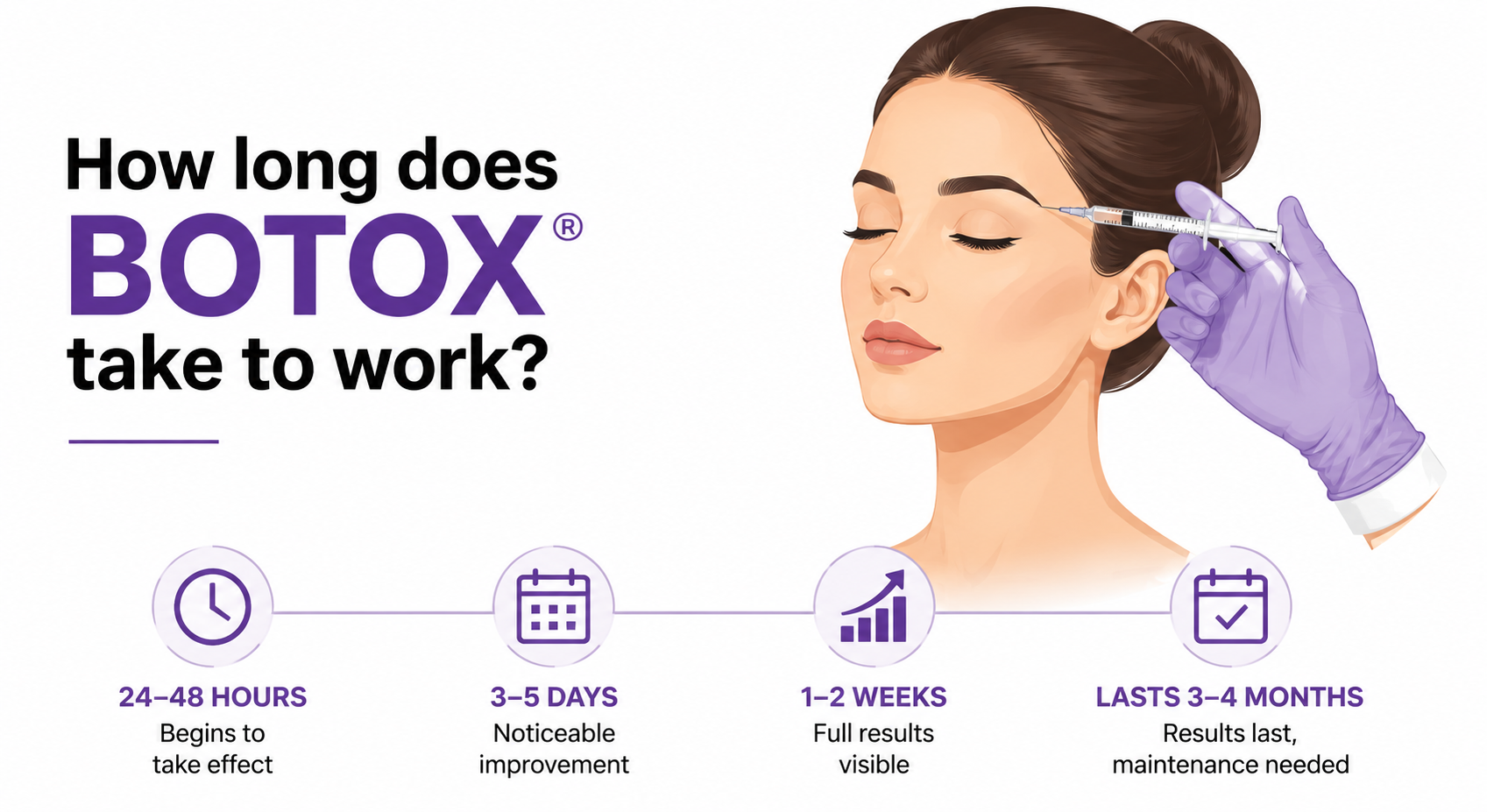
How long does Botox take to work?
Botulinum toxin, widely recognized by its brand name Botox, is the most popular non-surgical cosmetic treatment globally for reducing the appearance of wrinkles. When patients visit Quttainah Specialized Hospital for facial rejuvenation, one of the primary concerns is the timeline for results, specifically, how long does Botox take to work?
Unlike surgical procedures that offer immediate structural changes, injectable neuromodulators require a biological process to take effect within the body. While the injection process itself is quick and relatively painless, the results emerge gradually as the product settles into the targeted muscle groups.
Understanding how does botox work
To understand the waiting period, one must first look at how does botox work on a cellular level. Botox belongs to the neuromodulator class of drugs. Its primary function is to block the signals sent from the nerves to the muscles. Under normal circumstances, your brain sends a chemical messenger called acetylcholine to your muscles, telling them to contract.
When you smile, frown, or squint, these contractions create “dynamic wrinkles” in the skin. Once injected by a specialist at Quttainah Specialized Hospital, the botulinum toxin binds to the nerve endings and prevents the release of acetylcholine. Because the muscle no longer receives the signal to move, it remains in a relaxed state.
This relaxation allows the overlying skin to smooth out, reducing the depth of existing lines and preventing new ones from forming. This binding process is not instant; the toxin must be absorbed by the nerve cells and begin its inhibitory action, which explains why you do not see a “frozen” or smoothed effect the second you leave the clinic.
The typical timeline for results
While every patient possesses a unique physiology, most people follow a standard timeline regarding the onset of their results. The process is generally broken down into three stages:
1- The first 24 to 72 hours: During the first few days, you likely will not see any visible changes. Internally, the toxin is beginning to bind to the receptors. Some patients report a slight “heavy” feeling in the treated area, but the wrinkles will still appear as they did before the appointment.
2- Days 3 to 7: This is when most patients start to notice the first signs of the treatment. You may find that your ability to make extreme facial expressions, such as a deep frown or a high brow lift, is becoming restricted. The skin starts to look slightly more refreshed, though the full effect has not yet been achieved.
3- Days 10 to 14: By the end of the second week, the treatment reaches its peak. This is the official answer to how long does botox take to work? for the vast majority of individuals. At this stage, the muscle relaxation is complete, and the skin appears at its smoothest. Surgeons usually recommend waiting the full 14 days before considering a “touch up” or dose adjustment, as the final symmetry of the face cannot be judged accurately before this point.
Factors that influence the onset of action
Several factors can determine whether you see results on day three or day ten.
The size and strength of the muscle being treated play a significant role; for instance, the smaller muscles around the eyes (crow’s feet) often react faster than the larger, stronger muscles in the forehead or the jaw. Additionally, your individual metabolism and lifestyle can impact the timeline.
Patients with a very high metabolic rate or those who engage in intense daily exercise may find that their bodies process the protein slightly differently. The concentration of the dose also matters; while a higher dose does not necessarily make the product work “faster,” it ensures a more comprehensive blockage of the nerve signals, which can influence how the results settle in.
Maintenance and longevity: How often to get botox?
Botox is not a permanent solution, as the body eventually creates new neurotransmitters to bypass the blockage. To maintain a smooth and youthful appearance, patients need to understand how often to get botox to stay ahead of the muscle recovery.
On average, the effects last between three and four months.
Specialists at Quttainah Specialized Hospital typically recommend scheduling maintenance treatments every twelve to sixteen weeks.
If you wait until the movement has completely returned and the wrinkles have reappeared, the skin may begin to “break” again, making it harder to maintain a flawless finish. By sticking to a regular schedule, the muscles eventually become conditioned to stay relaxed, which can sometimes lead to longer intervals between sessions over time.
Book your consultation at Quttainah Specialized Hospital
The key to achieving natural, beautiful results with botox is choosing a provider who understands facial anatomy and precision. At Quttainah Specialized Hospital, our experts provide tailored aesthetic plans to help you look and feel your best. Contact Quttainah Specialized Hospital today to schedule your session.

FAQS
While you cannot change the biological binding speed of the toxin, some practitioners suggest gently exercising the treated facial muscles (such as frowning or lifting your eyebrows) for an hour after the session. This may help circulate the product into the nerve endings, though the difference in onset time is usually minimal.
.
Individual reaction times vary based on muscle mass, age, and skin elasticity. Men, for example, often have stronger facial muscles and may require more units or slightly more time to see a total smoothing effect compared to women with finer facial features.
Yes, it is quite common for the results to appear slightly asymmetrical during the first ten days. One side of the face may respond a few days earlier than the other. This usually balances out by the fourteen-day mark.
Long-term patients often find that their results appear more quickly and last longer. This is because the muscles undergo a degree of atrophy from lack of use, meaning they require less effort for the neuromodulator to keep them in a relaxed state.
Suitable candidates are near their ideal weight, have stubborn fat, and have realistic expectations about contouring outcomes.
To prevent the product from migrating to unintended muscles, you should avoid lying flat for four hours post-injection and refrain from vigorous exercise, saunas, or facial massages for at least 24 hours.
consultation, with safety and recovery considerations clearly discussed.