



SMAS vs Deep Plane Facelift: Which One Gives Better Results?
As the face ages, changes rarely happen in just one layer. Skin gradually loses elasticity, facial fat shifts or diminishes, and the deeper supporting tissues begin to descend.
This is why choosing a facelift is not simply about deciding whether to have surgery. Patients often want to understand SMAS vs Deep plane facelift techniques and how they differ in terms of results, recovery, natural appearance, and longevity.
Both are established surgical approaches to facial rejuvenation. Neither is automatically the right choice for every patient. The most appropriate technique depends on facial anatomy, the degree and location of tissue laxity, skin quality, previous surgery, and the surgeon’s assessment of what needs to be repositioned.
At Quttainah Specialised Hospital, facial rejuvenation is approached with the aim of enhancing a patient’s natural features rather than changing their identity.
What is a Facelift?
A facelift, medically known as rhytidectomy, is a surgical procedure designed to improve visible signs of aging in the face and, depending on the procedure, the neck. It may address sagging skin, jowls, weakened jawline definition, and descended facial tissues.
Facial aging is influenced by several factors, including:
- Natural loss of skin elasticity with age
- Gravity and gradual tissue descent
- Changes in facial fat volume and distribution
- Sun exposure and environmental damage
- Genetics
- Smoking and other lifestyle factors
- Significant weight fluctuations
It is an advanced facelift surgery. However, by repositioning tissues and removing or redraping excess skin where appropriate, it can restore a more youthful facial contour.
Did you know? The American Society of Plastic Surgeons identifies facelifts as procedures that tackle common visible signs of aging, including sagging skin, jowls, and looseness in the face and neck area. |
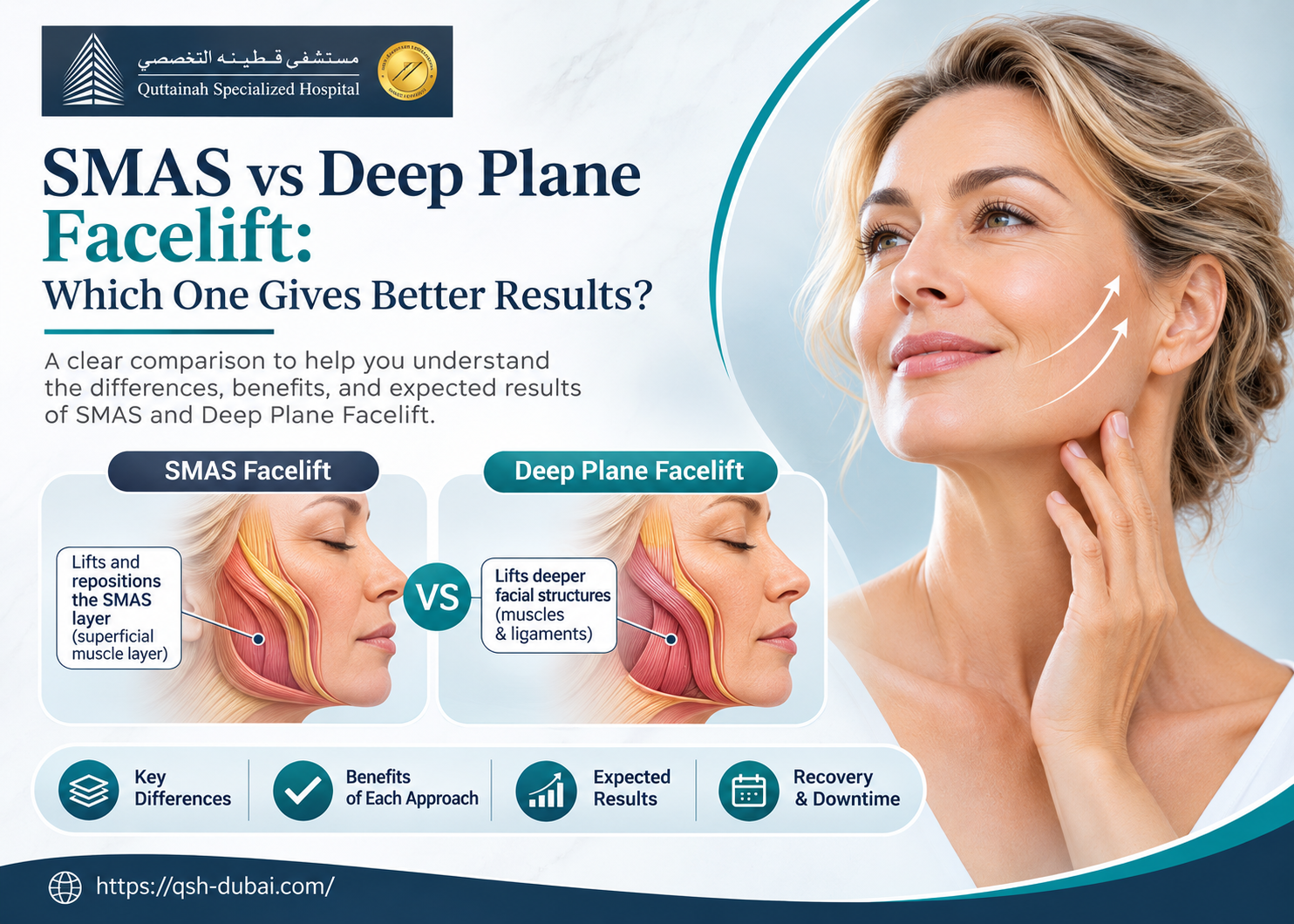
What is the difference between SMAS and Deep Plane Facelift?
The main difference lies in the anatomical layer being treated and how the deeper facial tissues are repositioned.
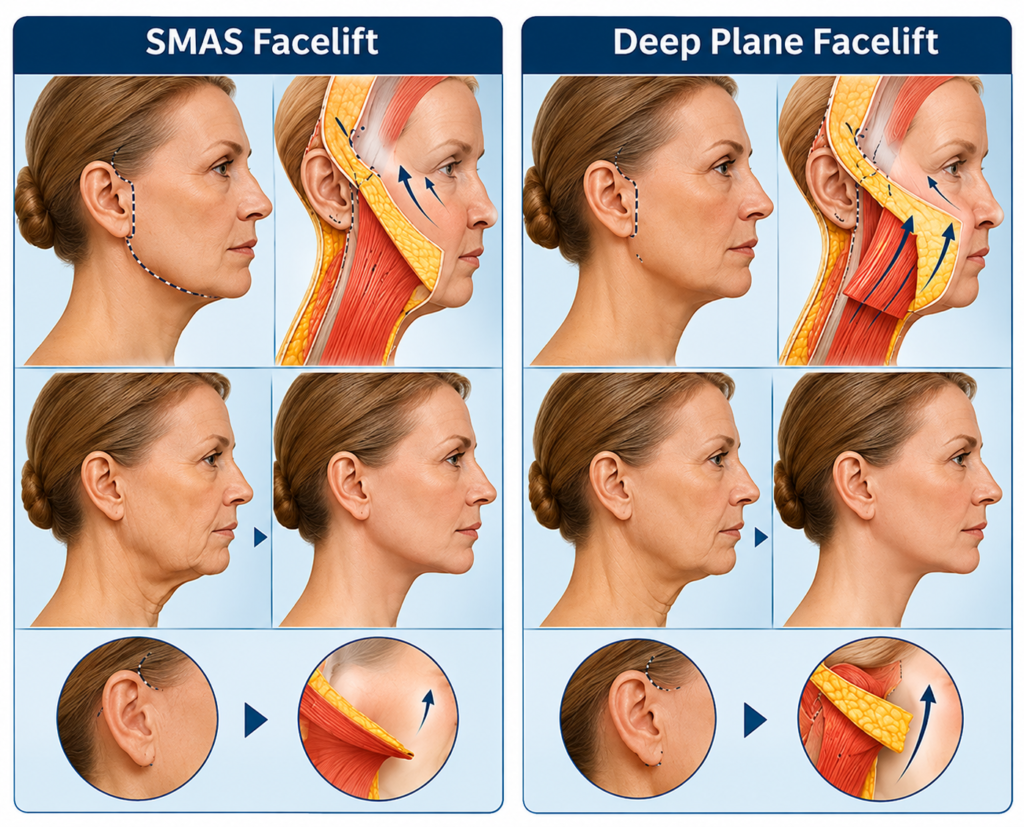
SMAS Facelift
The SMAS, or superficial musculoaponeurotic system, is a fibromuscular layer beneath the skin. In a SMAS facelift, the surgeon may tighten, fold, reposition, or otherwise modify this layer, depending on the specific SMAS technique used.
The skin is then redraped over the improved underlying structure. This approach can effectively address lower-face laxity, jowls, and jawline changes.
Deep Plane Facelift
A deep plane facelift works beneath the SMAS in specific anatomical planes. The surgeon releases selected facial retaining ligaments, allowing deeper facial soft tissues to be repositioned more as a unit.
This can be particularly useful when aging involves significant midface descent, cheek flattening, jowling, and lower-face laxity. The focus on repositioning deeper tissues rather than pulling on the skin is what sets this approach apart, and in appropriately selected patients, that difference tends to show up in how natural the results look.
The main difference between SMAS and deep plane facelift is therefore not simply that one is “better” or “more advanced.” The surgical strategy that works best will always come down to the individual patient’s anatomy and the goals they want to reach through treatment.
SMAS vs Deep Plane Facelift: How do the results compare?
The answer to which facelift technique is better depends on what the patient needs corrected.
Feature | SMAS Facelift | Deep Plane Facelift |
Main treatment layer | SMAS layer is tightened or repositioned | Deeper plane beneath the SMAS is addressed |
Common areas improved | Lower face, jowls, jawline | Midface, cheeks, jowls, and lower face |
Skin tension | Varies according to technique | Often reduced because deeper tissues are repositioned |
Natural movement | Can be highly natural when appropriately performed | Designed to reposition connected facial tissues together |
Surgical complexity | Varies by technique | Generally technically demanding |
Best approach | Depends on individual anatomy | Depends on individual anatomy and degree of descent |
A 2025 systematic review and meta-analysis of 21 studies involving 2,896 patients found high patient satisfaction with both techniques. The review reported higher pooled satisfaction for deep plane procedures but also a higher overall complication rate, highlighting an important point: no facelift technique is risk-free, and the surgeon’s experience and patient selection remain essential.
Which technique gives the most natural results?
Many patients are concerned about looking “pulled” or unlike themselves after surgery. In reality, natural-looking results depend on much more than the name of the facelift technique.
The outcome is influenced by:
- The patient’s facial anatomy
- The degree of tissue descent
- How much skin is removed
- The direction and extent of tissue repositioning
- Skin quality and healing
- The surgeon’s technical judgment
A deep plane facelift may provide great improvement in the midface and lower face for suitable patients because it repositions deeper tissues and releases selected retaining ligaments. However, a well-performed SMAS facelift can also produce highly natural results.
The SMAS facelift vs deep plane facelift results debate should therefore be viewed carefully. A technique is not automatically superior simply because it is described as “modern.” The best operation is the one that is properly matched to the patient.
How long do Facelift results last?
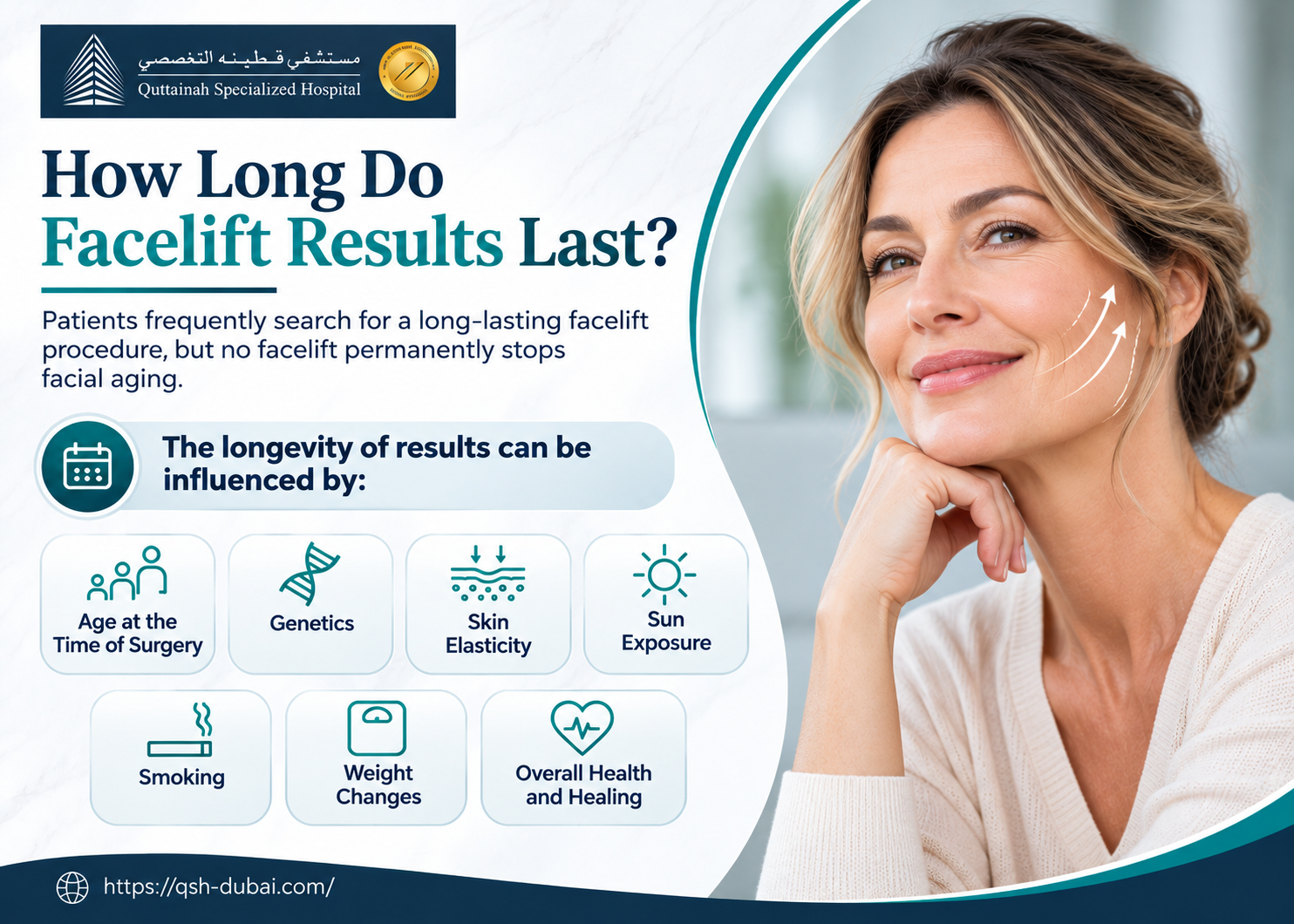
Patients frequently search for a long-lasting facelift procedure, but no facelift permanently stops facial aging.
The longevity of results can be influenced by:
- Age at the time of surgery
- Genetics
- Skin elasticity
- Sun exposure
- Smoking
- Weight changes
- Overall health and healing
Some studies and clinical discussions suggest that deep plane facelifts may offer durable results in appropriately selected patients, while SMAS techniques also provide long-lasting improvement. However, it is not medically responsible to promise a fixed number of years for every patient.
The goal of modern facelift techniques is not simply to make the face tighter. It is to restore facial structure in a way that remains balanced as the face continues to age naturally.
What happens during consultation and treatment planning?
A consultation is an important part of facelift surgery. The surgeon assesses the face at rest and during movement, looking at:
- Skin laxity
- Jowls and jawline definition
- Midface descent
- Neck changes
- Facial volume
- Previous procedures
- Overall health and expectations
At Quttainah Specialised Hospital, the surgeon may then discuss whether a facelift alone is appropriate or whether another facial procedure, such as a neck lift, may be relevant to the patient’s concerns.
This assessment is also where patients should discuss their expectations, concerns about scars, previous surgeries, medical conditions, medications, and smoking status.
Facelift recovery time: What should patients expect?
The exact facelift recovery time varies depending on the procedure performed and the individual’s healing process.
In general, patients can expect:
- Swelling and bruising during the early recovery period
- Gradual reduction in facial tightness and swelling
- A staged return to normal daily activities
- Continued refinement of results over the following weeks and months
Patients should follow their surgeon’s specific instructions regarding wound care, physical activity, sleeping position, and follow-up appointments. Recovery should not be judged too early, as the face continues to settle as swelling resolves.
Risks and benefits of Facelift Surgery
Like all surgery, facelift procedures carry potential risks. The potential complications can include bleeding or hematoma, infection, temporary or persistent sensation changes, scarring, asymmetry, healing that takes longer than expected, and issues related to the nerves.
Potential benefits may include:
- Improved facial laxity
- Reduced jowling
- Better jawline definition
- Repositioning of descended facial tissues
- A refreshed appearance that remains recognisably yours
The risks and expected benefits should be discussed during an individual consultation.

FAQS
Not universally. Deep plane and SMAS techniques address facial aging differently, and the best option depends on the patient’s anatomy, concerns, and the surgeon’s assessment.
Both can provide long-lasting results. Longevity varies with age, skin quality, genetics, lifestyle, and surgical technique rather than the procedure name alone.
When done right, both can deliver results that look genuinely natural. It all comes down to how well the tissue is repositioned, how conservatively the skin is managed, and the level of surgical expertise behind the procedure.
It may be worthwhile for suitable patients seeking correction of deeper facial tissue descent, but it is not automatically necessary for every patient considering facelift surgery.
The durability of a facelift is not a one-size-fits-all answer. Individual anatomy, the quality of the surgical approach, how well healing goes, and continued aging all have a say in how long the results hold up.
Choosing Between SMAS vs Deep Plane Facelift
When comparing SMAS vs Deep plane facelift, the most important question is not which technique is universally superior. It is which approach is most appropriate for your face.
Both techniques can produce meaningful and long-lasting facial rejuvenation when carefully selected and performed. A deep plane approach may be beneficial for certain patterns of deeper tissue descent, while a SMAS facelift may be appropriate for other patients and anatomical needs.
The right decision should be made after a detailed consultation with an experienced plastic surgeon who can assess your facial structure, explain the available options, and create a treatment plan based on your individual goals.
At Quttainah Specialised Hospital, the focus of facial rejuvenation is to achieve results that are refined, balanced, and appropriate for the individual, not simply to follow a trend or choose a technique because it is currently popular.