


How Long To Wear Compression Garment After Lipo
How long to wear compression garment after lipo, there is no universal timeline that applies to every patient. However, most patients are advised to wear a compression garment consistently for the first few weeks after liposuction, often for most of the day and night.
The exact duration, however, depends on the areas treated, the extent of liposuction, swelling, and how your body is healing.
At Quttainah Specialized Hospital (QSH) in Dubai, our surgeons combine high-definition liposuction with technologies like VASER, J-Plasma skin tightening, and Morpheus8, and each combination calls for a slightly different compression protocol.
So instead of giving you a fixed timeline, this guide walks through what actually determines, after lipo how long to wear compression garment.

Compression after Lipo: At a glance
- Purpose: Helps manage swelling and supports the treated tissues during healing.
- Early recovery: Compression is commonly worn consistently during the initial recovery period.
- Duration: Usually for weeks, depending on your individual recovery period.
- Daily wear: Your surgeon may recommend wearing it for most of the day and night initially.
- Foam: May be recommended in selected cases for additional, targeted compression.
- Key point: A tighter garment or longer wear time does not necessarily mean better results.
How long to wear compression garment after Lipo?
There’s no fixed timeline for everyone. Compression is usually worn most consistently during the first few weeks after liposuction, when swelling and bruising are more noticeable. Your surgeon may then reduce the wearing time as your recovery progresses.
A realistic phase-by-phase timeline
Weeks 1–2: Near-constant wear – Expect to wear your garment close to 23 hours a day, removing it only briefly for hygiene. This is the most critical stretch for controlling swelling. | Weeks 3–4: Transitioning to a second-stage garment – Many patients move to a slightly lighter, more comfortable compression garment. Wear time typically drops to 12–16 hours daily. | Weeks 5–8: Night wear or activity-based wear – By this stage, most patients only need compression during exercise or overnight, depending on how their body has responded. | Beyond week 8 – For larger-volume procedures or areas combined with skin tightening, your surgeon may recommend light compression for a few additional weeks to support appropriate results. |
Why compression after Lipo isn't optional?
Compression is part of recovery, not the mechanism that creates your liposuction result. The contour comes from removing unwanted fat and carefully shaping the treated areas during surgery. A properly fitted garment:
- Reduces swelling by supporting lymphatic drainage
- Provides support as the skin and underlying tissues settle during recovery
- May help manage fluid accumulation in the treated area
- Supports the tissue while it heals, reducing discomfort
Skipping this step or removing your garment too soon can lead to uneven swelling, prolonged bruising, and a final result that takes far longer to appear.
How many hours a day should you wear compression garment after Lipo?
During the early recovery period, your surgeon may recommend wearing the garment for most of the day and night, removing it for activities such as showering, changing, or garment care.
Your specific instructions may differ, so don’t assume that wearing it longer will speed up recovery.
For comfortable and consistent use:
- Follow your prescribed wearing schedule.
- Keep the garment clean and dry.
- Make sure it fits correctly.
- Change into a clean garment when necessary.
- Tell your surgical team if it becomes excessively painful or uncomfortable.
ASPS guidance also emphasizes following your surgeon’s individual instructions because compression protocols can vary.
How long to wear foam after Lipo?
Foam is sometimes placed beneath a compression garment to provide additional, localized pressure to selected areas.
If you’re asking how long to wear foam after lipo, there isn’t a standard duration for everyone. Your surgeon may recommend it based on the areas treated, the type of liposuction performed, and your postoperative swelling.
Foam may be used to:
- Add targeted compression
- Support specific treated areas
- Help distribute pressure beneath the garment
- Complement the overall compression plan
Not every patient requires foam. If it has been recommended for you, follow your surgical team’s instructions about placement, removal, and duration rather than adding or repositioning it yourself.
Can compression after Lipo be too tight?
Yes. A compression garment should feel firm and supportive, not excessively restrictive.
Pay attention to symptoms such as:
- Increasing pain
- Persistent numbness or tingling
- Significant skin irritation
- Unusual skin discoloration
- Deep or persistent pressure marks
- Difficulty breathing
If something feels wrong, contact your surgical team rather than simply tightening or loosening the garment yourself.
Compression is intended to support healing, not create unnecessary pressure.
Can you sleep without a compression garment after Liposuction?
During the early recovery period, you may be instructed to keep your garment on while sleeping. As swelling improves, your surgeon may allow you to transition to nighttime-only wear or gradually stop using it.
ASPS guidance notes that compression may initially be used continuously before patients transition to a reduced schedule as healing progresses.
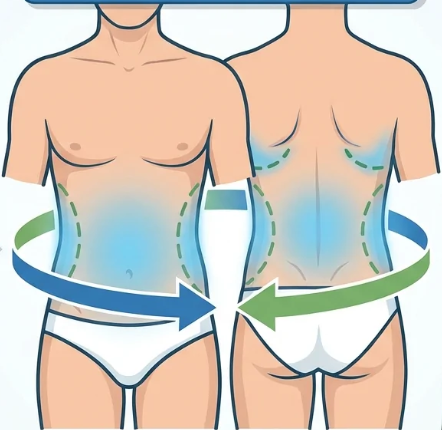
When can you stop wearing it?
Don’t use the calendar alone to make this decision. Your surgeon may consider:
- Remaining swelling
- How the treated tissues are settling
- The areas treated
- Your skin’s response
- Your overall recovery
- Findings during follow-up appointments
At QSH, liposuction is planned around the individual’s anatomy and desired body contours, with patient safety and personalized care forming part of the treatment approach.
Why the answer depends on your technique?
Your compression schedule can also vary depending on the type of liposuction and any procedures performed alongside it. The honest answer to how long to wear compression garment after lipo genuinely depends on what kind of liposuction you had:
Traditional liposuction: Typically calls for a more straightforward compression schedule, since fat removal alone puts less demand on skin retraction. | High-definition (VASER) liposuction: Because VASER technology emulsifies fat with more precision around muscle definition, compression needs to be more consistent early on to help the skin settle into its new contour. | Combined with J-Plasma or Morpheus8: When skin tightening is added to sculpt the area further, your surgeon may extend compression time slightly, since the skin is undergoing more active remodeling. |
This is also why, at QSH, your compression schedule is set individually after your procedure rather than handed to you as a generic printout
Common mistakes that slow recovery
- Removing the garment too early because it feels “done”
- Choosing a compression level that’s too tight or too loose
- Changing your compression schedule without checking with your surgical team
- Ignoring surgeon-specific instructions in favor of generic online advice
How to make your compression garment more comfortable?
Compression garments can take some getting used to, particularly during Dubai’s warmer months.
A few practical steps can help:
- Keep a spare garment: This makes it easier to maintain good hygiene while one is being washed.
- Keep the skin dry: Sweat and moisture can contribute to irritation.
- Check your skin regularly: Persistent marks or irritation should be discussed with your surgical team.
- Wear the correct size: A garment should provide support without causing excessive pressure.
- Follow garment-care instructions: Proper washing helps maintain hygiene and garment performance.
Most importantly, don’t stop wearing compression simply because it feels uncomfortable in the heat; discuss it with your surgical team first.

FAQS
Most patients wear compression consistently for around six to eight weeks, though this can extend for larger-volume procedures or those combined with skin tightening.
Generally two to three months in total, moving through near-constant wear, then a lighter second-stage garment, then night or activity-only wear.
In the first two weeks, aim for close to 23 hours daily. This gradually decreases as swelling subsides.
Not in the early weeks. Most surgeons recommend wearing it overnight for at least the first month, then transitioning to night-only wear later in recovery.
Only once your surgeon confirms swelling has plateaued and your skin has settled, typically between six and twelve weeks depending on your procedure.
The QSH approach to Post-Lipo recovery
Every compression after lipo plan at QSH is built around the actual technique used, not a generic handout. Our surgeons, known for advanced high-definition and 360° liposuction techniques, work alongside our in-house lymphatic drainage and wellness team to personalize your recovery from day one.
Paired with private recovery suites and close post-operative follow-up, our goal is to make sure your results, and your comfort along the way, are looked after with the same precision as your surgery itself.
Ready for a smoother, more personalized recovery?
Compression after lipo isn’t just a formality; it’s an important part of your recovery. Book a consultation with QSH Dubai today and get a recovery plan built specifically around your procedure.